
Environmental Community Newsletter - June 19, 2026
From Compliance to Climate Action — Connecting People, Policy, and Planet

The SEC just made ESG reporting mandatory for Philippine companies. And the E in ESG? Your business may already be producing that data.
At the ASEAN-EU Sustainability Summit in Cebu last May, the SEC made it clear: transparency on sustainability is no longer optional.
Source · Manila Standard, May 25, 2026 — SEC urges transparent ESG reporting to boost trust
Self-Monitoring Reports (SMR)
capture your air and water quality data.
Compliance Monitoring Report (CMR)
document your regulatory standing.
Environmental Management Plan (EMP)
maps your risks and what you are doing about them.
ESG stands for Environmental, Social, and Governance — a way of measuring how a company manages its impact on the environment, treats people, and runs itself responsibly. For years, reporting on this was optional in the Philippines. That changed in December 2025, when the SEC made it mandatory for large listed companies starting FY2026.
Here is what most Cebu businesses miss: if you have been doing your environmental compliance work properly, you already have most of the data the E-pillar requires. Your quarterly Self-Monitoring Reports (SMR) capture your air and water quality data. Your Compliance Monitoring Reports (CMR) document your regulatory standing. Your Environmental Management Plan (EMP) maps your risks and what you are doing about them.
The question is not whether ESG is coming. It is whether your business will be ready — and whether you realize how much work you have already done.
ESG in Practice: What It Really Costs — and Why Cebu Businesses Can No Longer Ignore It
The Envi-Comm Forum returns June 29 for an honest, practitioner-led conversation on ESG as a real business requirement.
This is not a policy seminar. The Envi-Comm Forum on June 29 is a closed, practitioner-led session covering what ESG actually requires of Philippine businesses, where the real compliance costs lie, and what needs to be in place before the year ends. The second half opens into a roundtable — every attendee joins the conversation.
Date: Monday, June 29, 2026 — Final day of Environment Month
Time: 2:00 PM – 5:00 PM (Registration opens at 1:00 PM)
Venue: AVR, Aboitiz Corporate Center, Cebu City
Seats: Limited to 30 participants
Request an invite below or reach us at sales@envicomm.org or +63 954 291 5171
Even after a project gets its permits, the community still gets a say — and that's exactly how it should work.
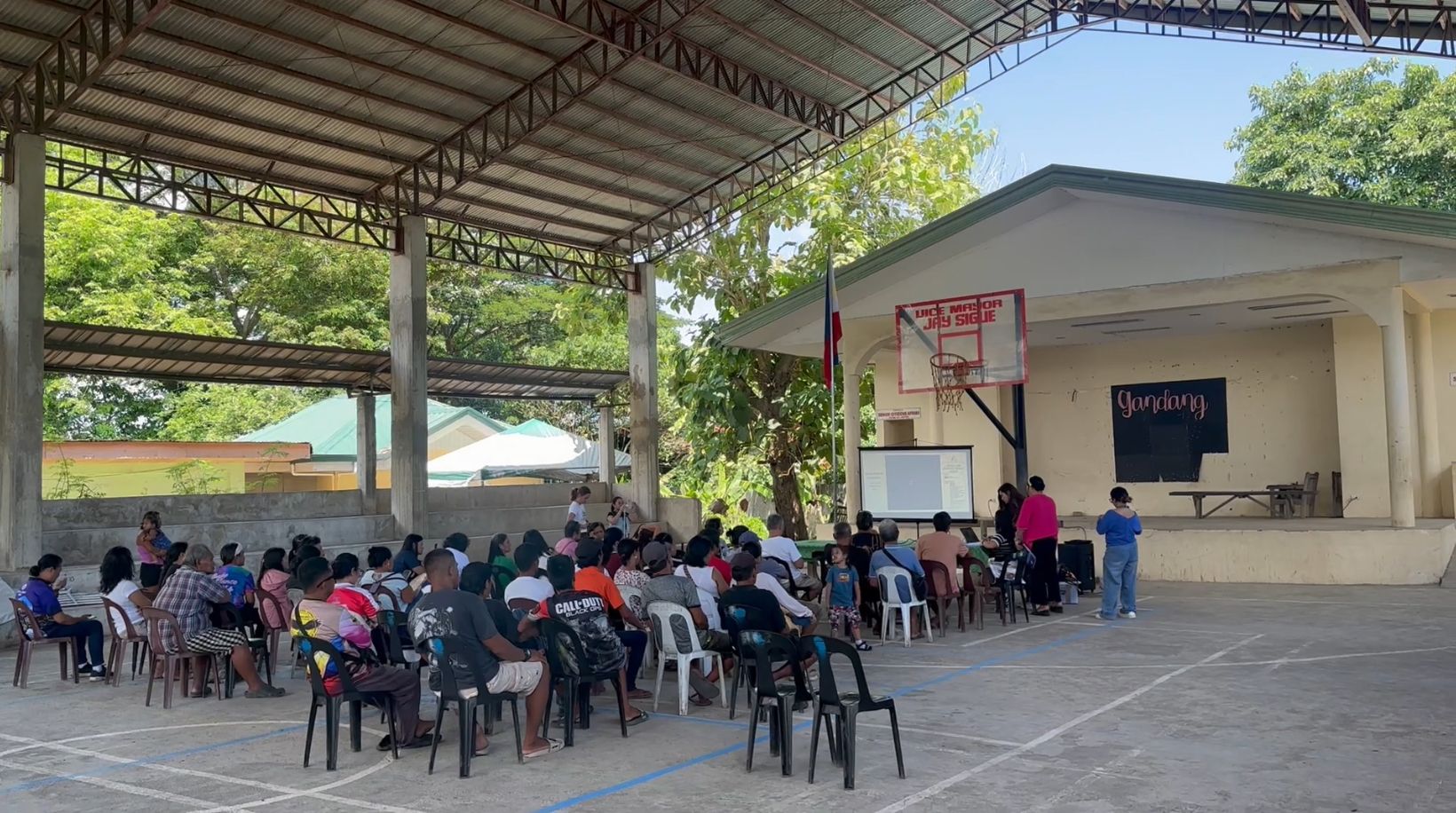
The Nautilus Toledo Industrial Area (NTIA) in Dumlog, Toledo City already has an environmental clearance. But when a project changes its plans — even after approval — Philippine environmental law requires going back to the community before moving forward. An amendment isn't just a paperwork update. It restarts the conversation.
Last week, residents in Dumlog gathered for a Focus Group Discussion (FGD) — a formal consultation where community members, local officials, and affected groups put their concerns on the record. Their inputs don't just get noted. They shape how the amended project moves forward.
That process exists because a permit does not end the conversation with a community. It starts it.
The SEC’s ESG rule starts with the biggest companies. But if you work with them — or plan to — your ESG readiness already matters.
ESG requirements don't stop at the company that has to file them. They travel through supply chains. If your business supplies to, works with, or borrows from a large listed company, they may soon ask for your ESG data too.
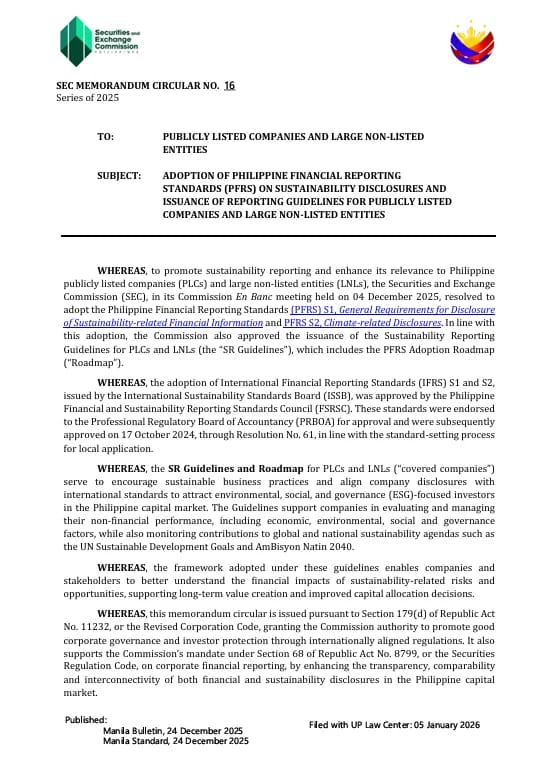
The good news: if you've been doing your compliance work properly, you already have most of what the Environmental pillar requires. Here's a quick check:
- Air and water monitoring data: already in your quarterly SMR
- Hazardous waste records: your DENR manifests cover this
- Environmental compliance standing: your CMR and ECC conditions document this
- Environmental risk management: your EMP is the record
- Energy and fuel consumption: most companies haven't started tracking this yet. Begin now with simple monthly logs of electricity and fuel use.
We've put together a one-page checklist that maps every E-pillar requirement to the specific compliance document that covers it — download it below.
Free Resource

This issue was originally sent to subscribers on Beehiiv .