
Environmental Community Newsletter - June 11, 2026
From Compliance to Climate Action — Connecting People, Policy, and Planet

14 tons of medical waste — every day. And hospitals in Mindanao don’t know where to send it.
A city councilor raised the alarm this week. The problem goes well beyond one city.
Source · GMA News, June 7, 2026 · https://mb.com.ph/2026/05/15/denr-treats-environmental-crimes-as-national-security-concern-under-new-enforcement-standard
14 tons
of medical waste generated in CDO every single day
4 cities
where waste has to be shipped — Davao, Tacurong, GenSan, or Cebu
Illegal
burying hazardous waste — some health centers are already doing this
This week, a city councilor in Cagayan De Oro sounded the alarm: hospitals and clinics in the city are producing 14 tons of medical waste everyday — and there is no nearby facility that can properly treat it.
To dispose of it the right way, waste has to be shipped to Davao, Tacurong, General Santos, or even Cebu. That is expensive. That is far. And according to the councilor’s report, some health centers have started burying their hazardous waste instead — because it is cheaper, even though it is against the law.
Think about what that means. Syringes. Blood samples. Infected materials. Going into the ground, near people’s home.
What the law says: Every health facility in the Philippines is required by law to make sure their medical waste goes to a DENR-accredited treatment facility. Using an unlicensed hauler or burying waste on-site is a violation — no matter how expensive or how far the nearest facility is.
The bigger problem? CDO is not alone. Across Visayas and Mindanao, there is a growing gap between how much hazardous healthcare waste is being made — and the infrastructure that can actually handle it safely. The answer is not just following the rules more closely. The answer is building the facilities that make it possible to follow the rules at all.
Does your hospital or clinic have an accredited medical waste hauler? Check the DENR list of licensed treatment facilities — and share this with your healthcare contacts who need to know.
June is Environment Month. We are closing it out with the biggest EnviComm Forum yet.
A midyear conversation on where environmental compliance stands — and where it needs to go.
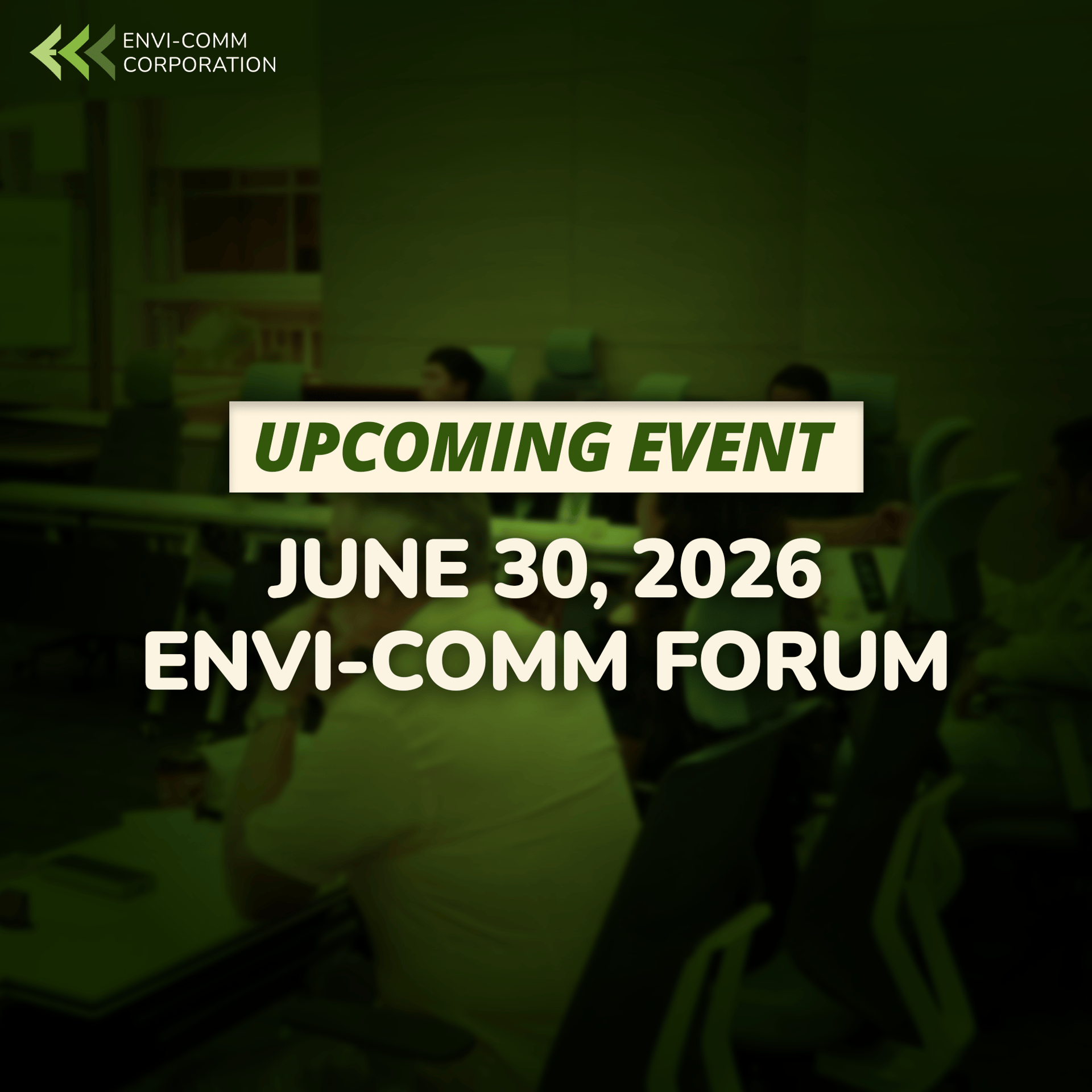
June is Environment Month in the Philippines — a time when the conversation around sustainability, compliance, and climate action gets louder. We are using this moment to bring the right people into the same room.
The EnviComm Forum’s June session is our midyear checkpoint. Leaders from different industries will come together for an open roundtable: what has changed in the first six months of 2026, what is working, and what needs attention before the year ends.
This June, we are also opening a small exhibition area — a space for organizations working on sustainability and environmental solutions to connect directly with Forum attendees.
Date: Tuesday, June 30, 2026 · Time: 2:00 PM (Registration at 1:00 PM) · Venue: Aboitiz Corporate Center, Cebu
By invitation only.
Engr. Michael Guiñarez knows this project is not about LEYECO V.
It is about the communities they power.
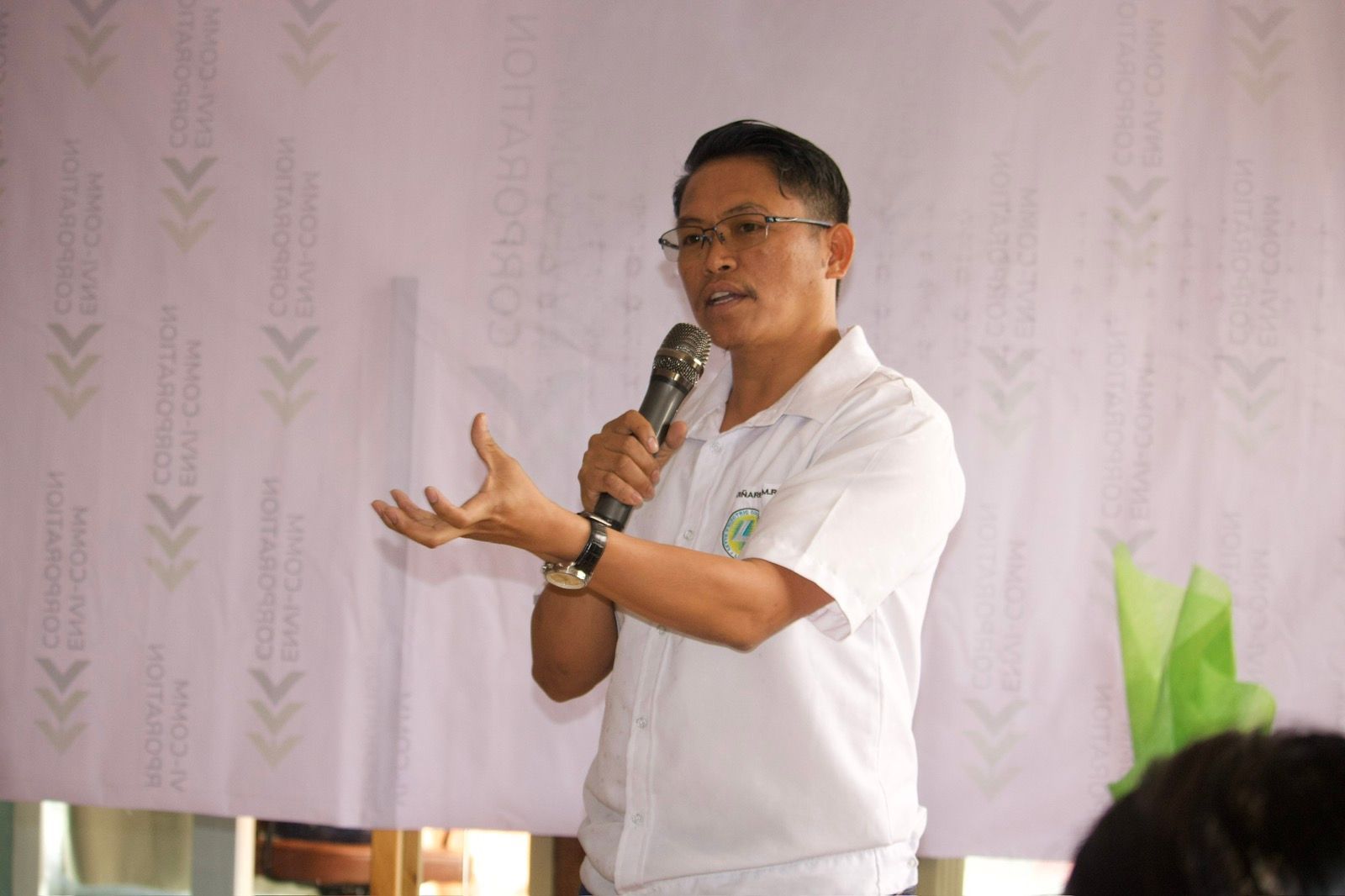
Engr. Michael Guiñarez is the Corporate Planning Manager of Leyte V Electric Cooperative, Inc. (LEYECO V) — one of the electric cooperatives serving communities across Leyte. In June, he was part of a two-day workshop on the 2MW Bao Mini-Hydroelectric Power Plant, focused on building the project’s Integrated Watershed Management Plan (IWMP) — a plan for protecting the land and water surrounding the power plant site.
“Kining project, dili kay LEYECO V — (This project is not just LEYECO V’s) — it is for the community. Rest assured, while we construct this project, we will make sure that we are compliant with all applicable rules and regulations, especially in the environment. We have to comply.”
He also spoke about what made the workshop work — the inputs from local government units, barangay officials, the Liga ng mga Barangay, CENRO, and ENRO representatives who all showed up and contributed.
“Nakita nako ang kaanindot sa collaboration (I saw the beauty of the collaboration) — the inputs, what we needed to share here. The unity — we saw it.”
For Engr. Guiñarez, the goal is clear: whatever livelihood programs, community projects, and benefits the law requires for the host communities — LEYECO V will make sure they are delivered.
Your hospital handed the waste to a transporter. Under Philippine law, your responsibility did not end there.
Hazardous Waste Tips and Insights from Engr. Ken Pajayat, DENR-EMB Region 7 representative
EnviComm Forum, May 20, 2026
The "cradle to grave" rule means the hospital stays accountable — from the moment waste is created to the moment it is fully disposed of.
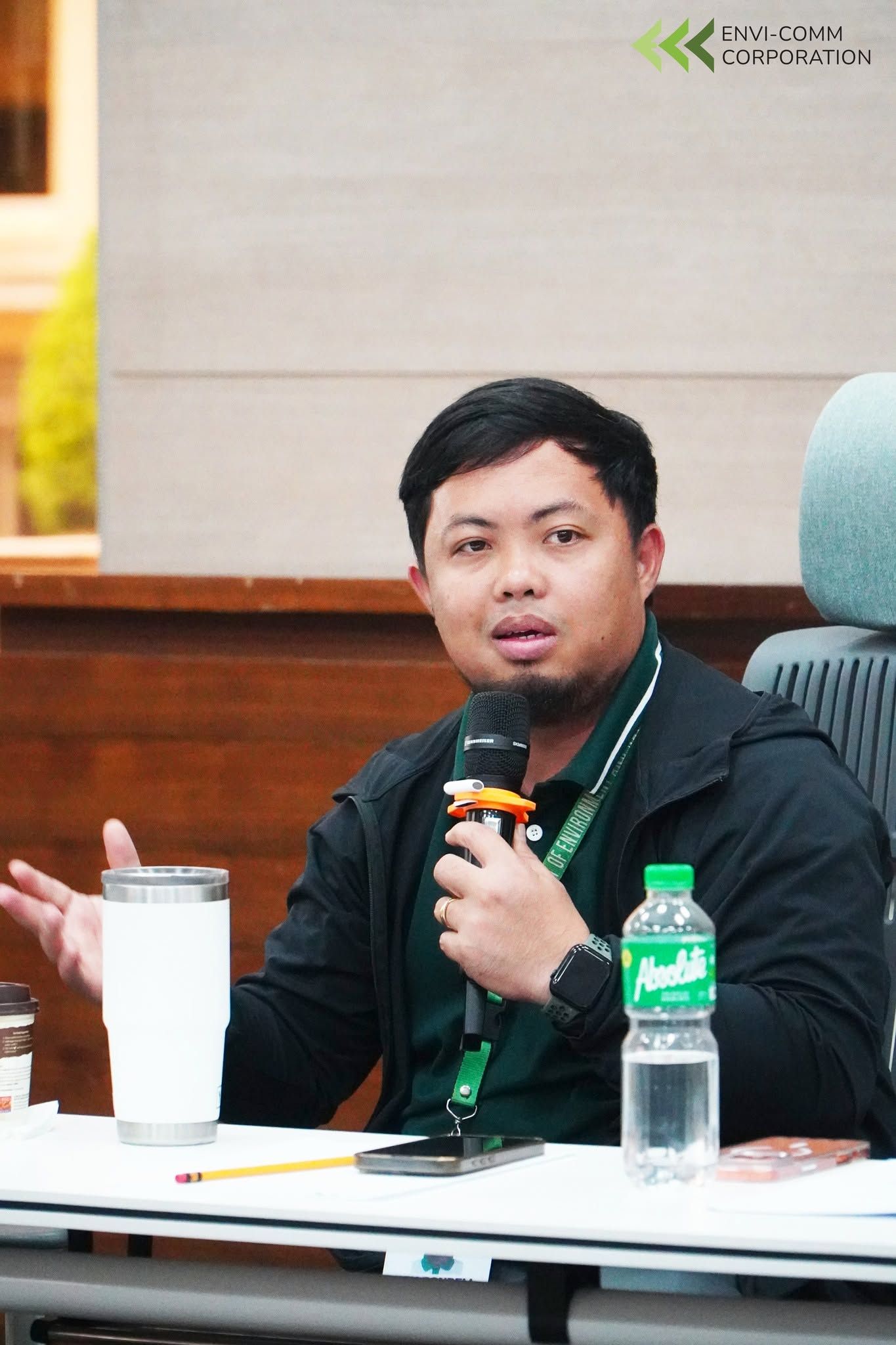
Republic Act 6969 — the law governing hazardous waste in the Philippines — follows a simple but strict principle: the generator (the hospital) is responsible for their waste from start to finish. Even after it leaves your hands, it is still your liability if something goes wrong. · · Here is what that looks like in practice:
- Separate healthcare waste from regular trash. Solid waste falls under RA 9003. Healthcare waste — used syringes, blood-soaked materials, infectious items — falls under RA 6969. They are two different laws, two different systems. They must be separated from the start using color-coded bins following both DOH and DENR guidelines.
- Know how your waste gets treated. Some hospitals treat waste on-site using an autoclave — a machine that uses high-pressure steam to kill infectious material, making it safe to handle. Others use pyrolysis — a high-heat process that burns waste down to ash. Both are valid methods. But any residue that still needs to leave the facility must go to a DENR-licensed treatment and disposal site.
- Use a licensed hauler — and verify their accreditation. Your transporter must be DENR-accredited. If they are not, your facility is still legally responsible for whatever happens to that waste. Do not assume. Check.
As per Engr. Pajayat, in Cebu, there are currently only two licensed facilities that can legally receive and treat hazardous healthcare waste. For the rest of Visayas and Mindanao, the nearest option can be hundreds of kilometers away — a gap that makes compliance harder and more expensive than it needs to be.
Free Resource
A one-page guide to what inspectors check — and what to prepare.

This issue was originally sent to subscribers on Beehiiv .